 ZW-2026 · A2Stereo
Case study · everysong · May to November 2026
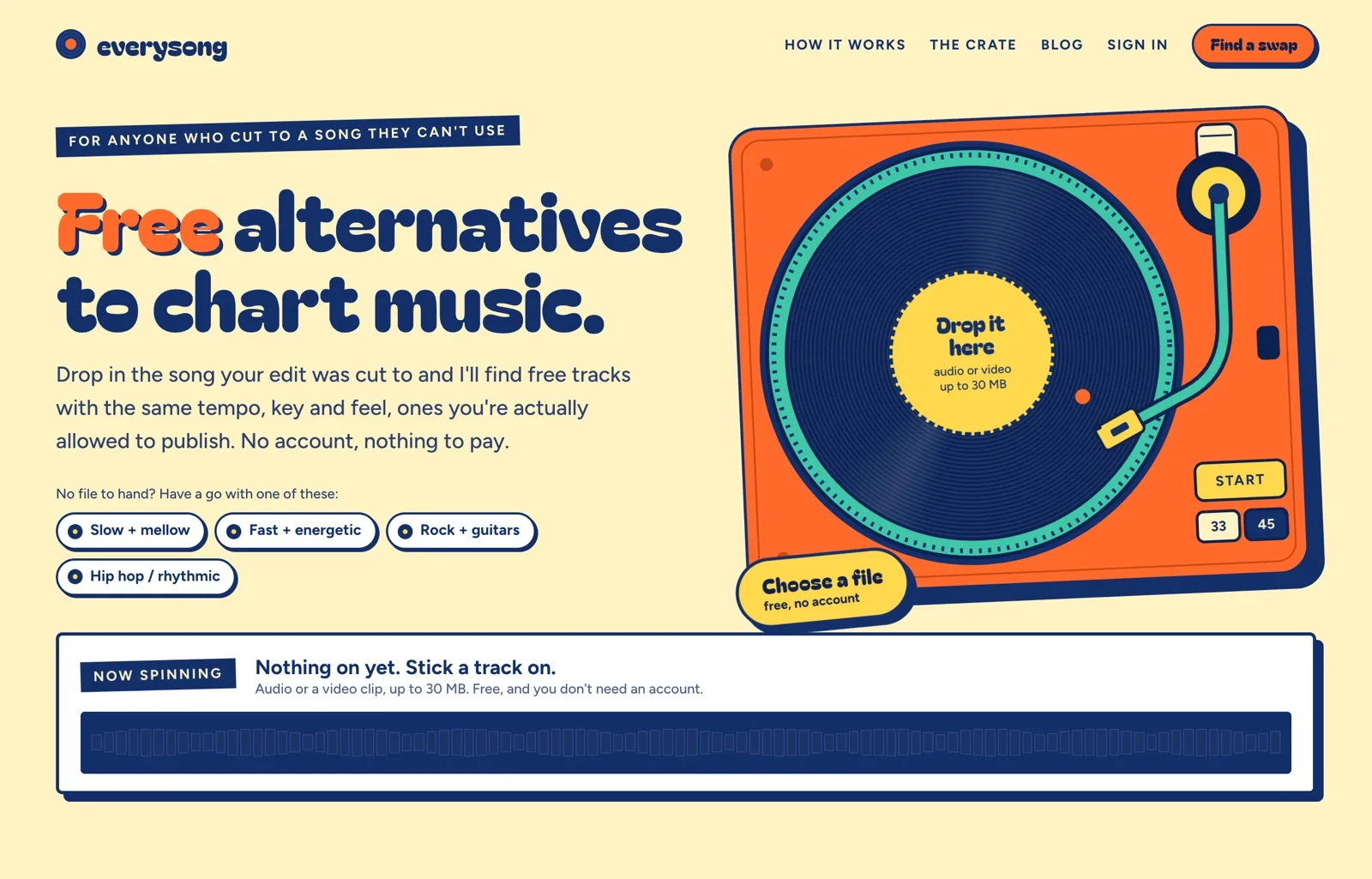
Free alternatives to chart music.
everysong is for anyone who cut their edit to a song they can’t use. Drop the song in and it finds free tracks with the same tempo, key and feel, ones you’re actually allowed to publish. It took me three versions in six months to get it right.
Best on a desktop or laptop, where the real everysong runs right inside this page.
- 12,751tracks, every one licence-checked
- £0to use, no account
- 12k+songs Vera has measured
- 3versions in six months
Try it
This is the real tool, not a demo. Ten free a day.
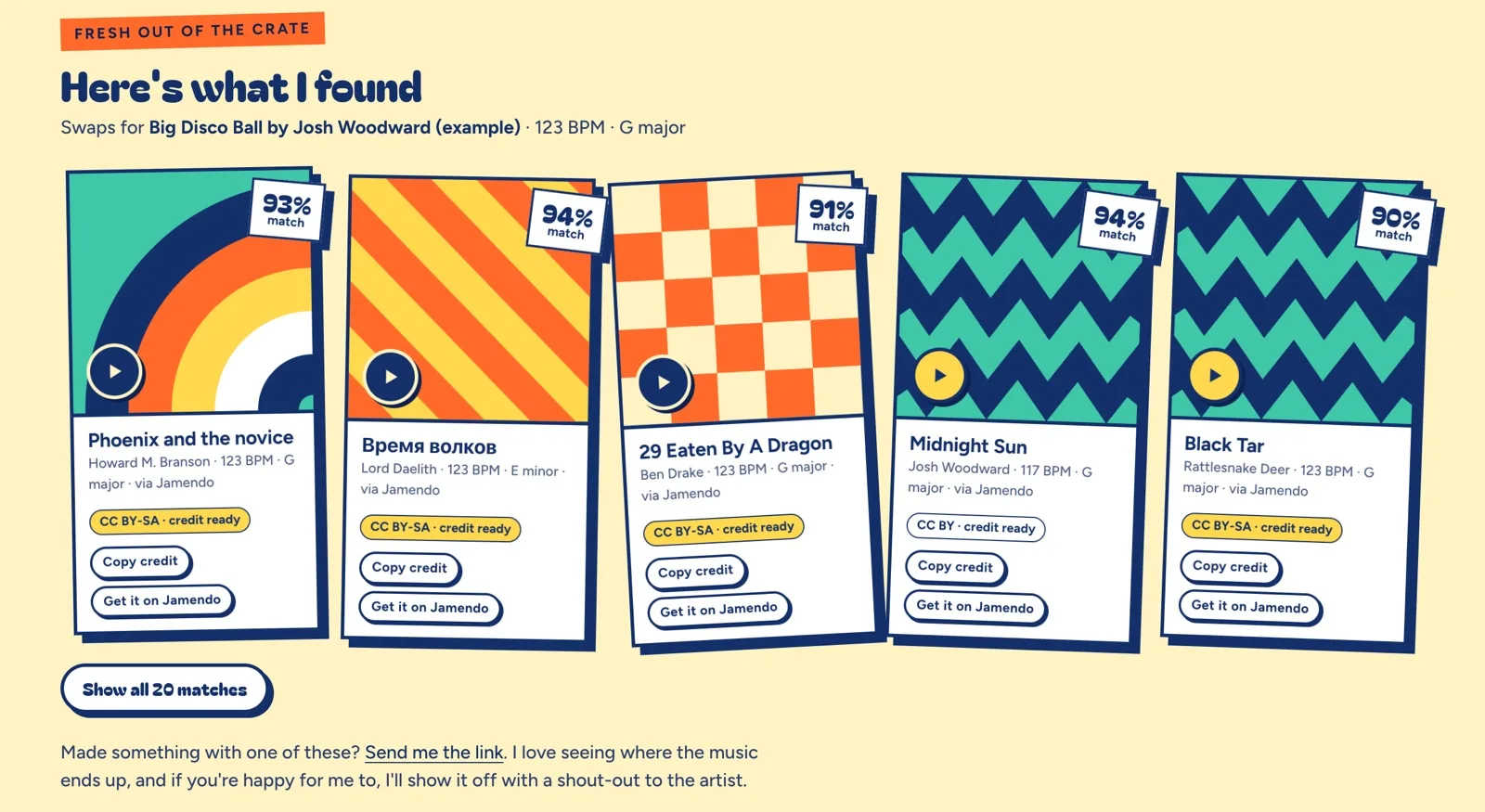
No song to hand? Press Fast + energetic and you’ll get five free swaps, each with a credit line ready to copy.
Where it started
01
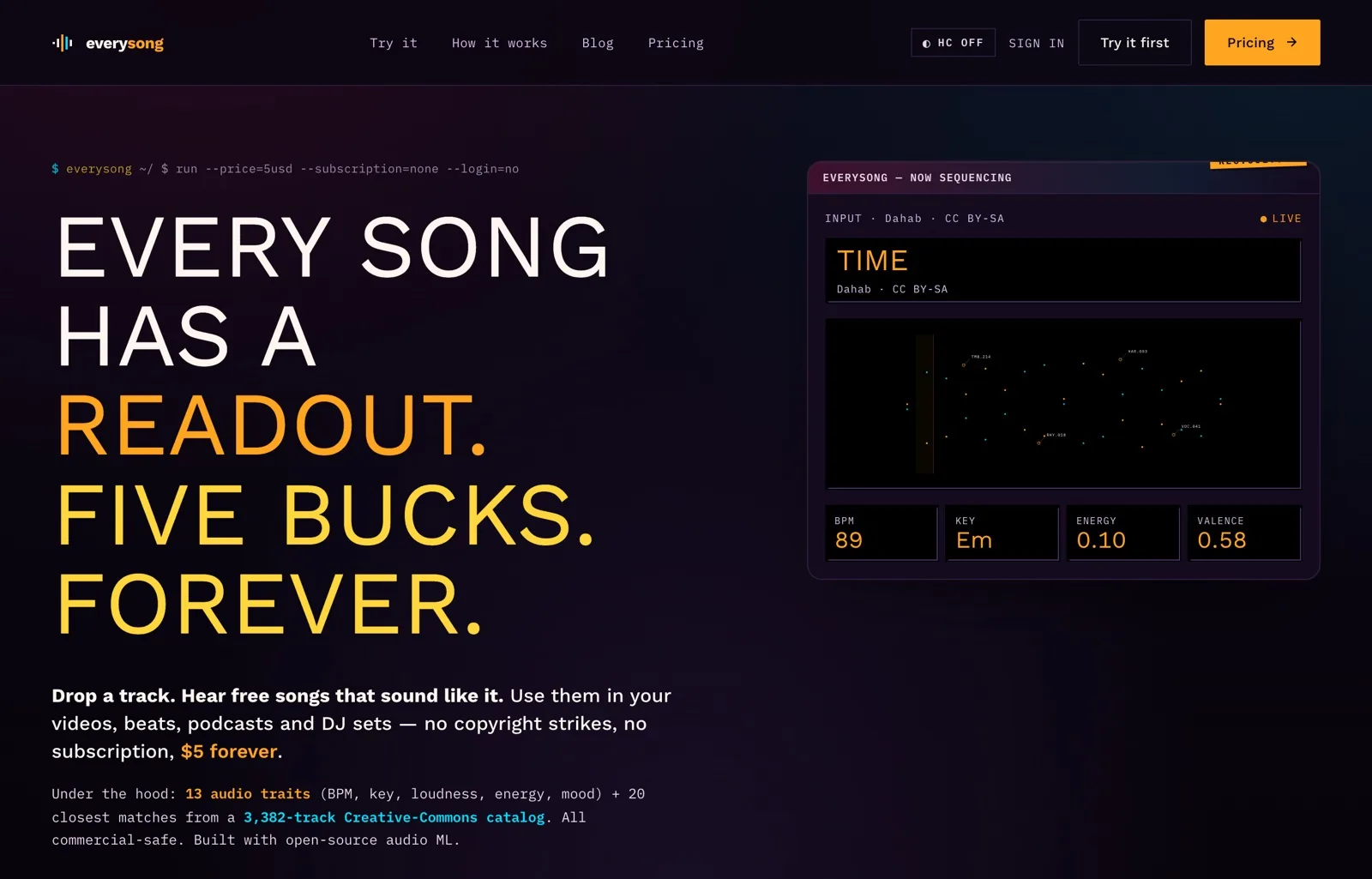
I launched everysong in May. Five dollars, once, for a readout of any song and twenty Creative Commons tracks that sounded like it. It looked like a developer tool, because that’s what I thought it was.
Two months later I went back and counted. No sales. One person in the users table, and it was me. Plenty of people were visiting, but nobody wanted to pay five dollars to find out if it worked.
That was the most useful thing it ever told me.
The rebuild
03
By November people were using it every day, and uploads had gone up every month since August. When I went back through it, three things weren’t good enough. Too few matches sat on the right beat, the catalogue needed a cleaner source, and the free daily limit had never actually worked.
So I put it on a holding page while I rebuilt it, and made everysong free for good.
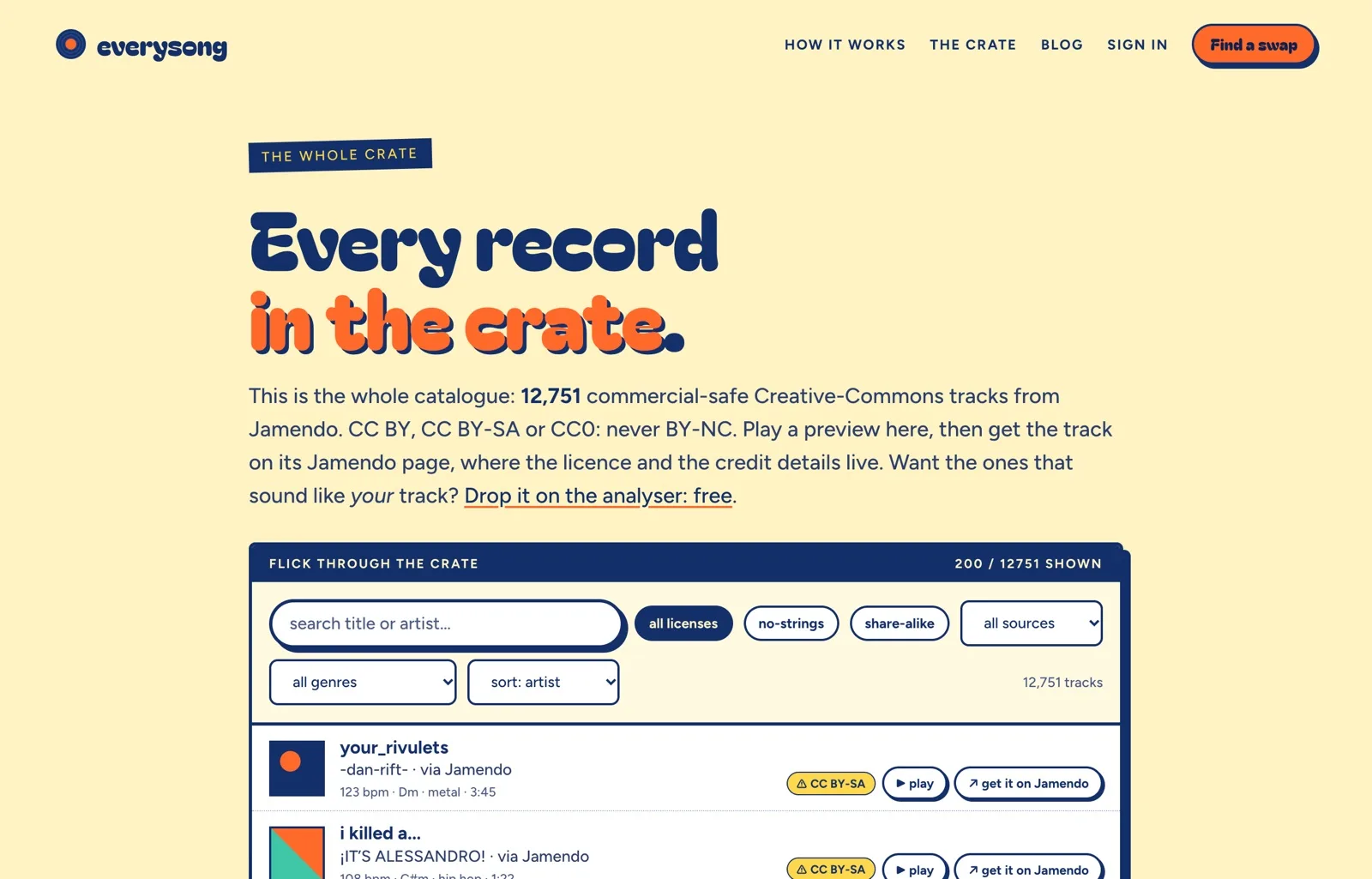
Then I rebuilt the catalogue from the Jamendo API, licence-filtered and measured by Vera, my own audio engine. A daily check now switches off any track that’s removed or relicensed, and a dated log gets a new entry every Monday.
Made for editors
04
Matches are ranked by sound first, then tempo and key, so a swap drops onto your edit without re-timing it.
- Cut points. Every readout maps the beat for the whole song: the BPM, where every bar starts, frames per beat at 24, 25 and 30fps, and a CSV for your timeline.
- Swap check. Upload the track you’re thinking of using and it tells you straight whether your cuts will still land.
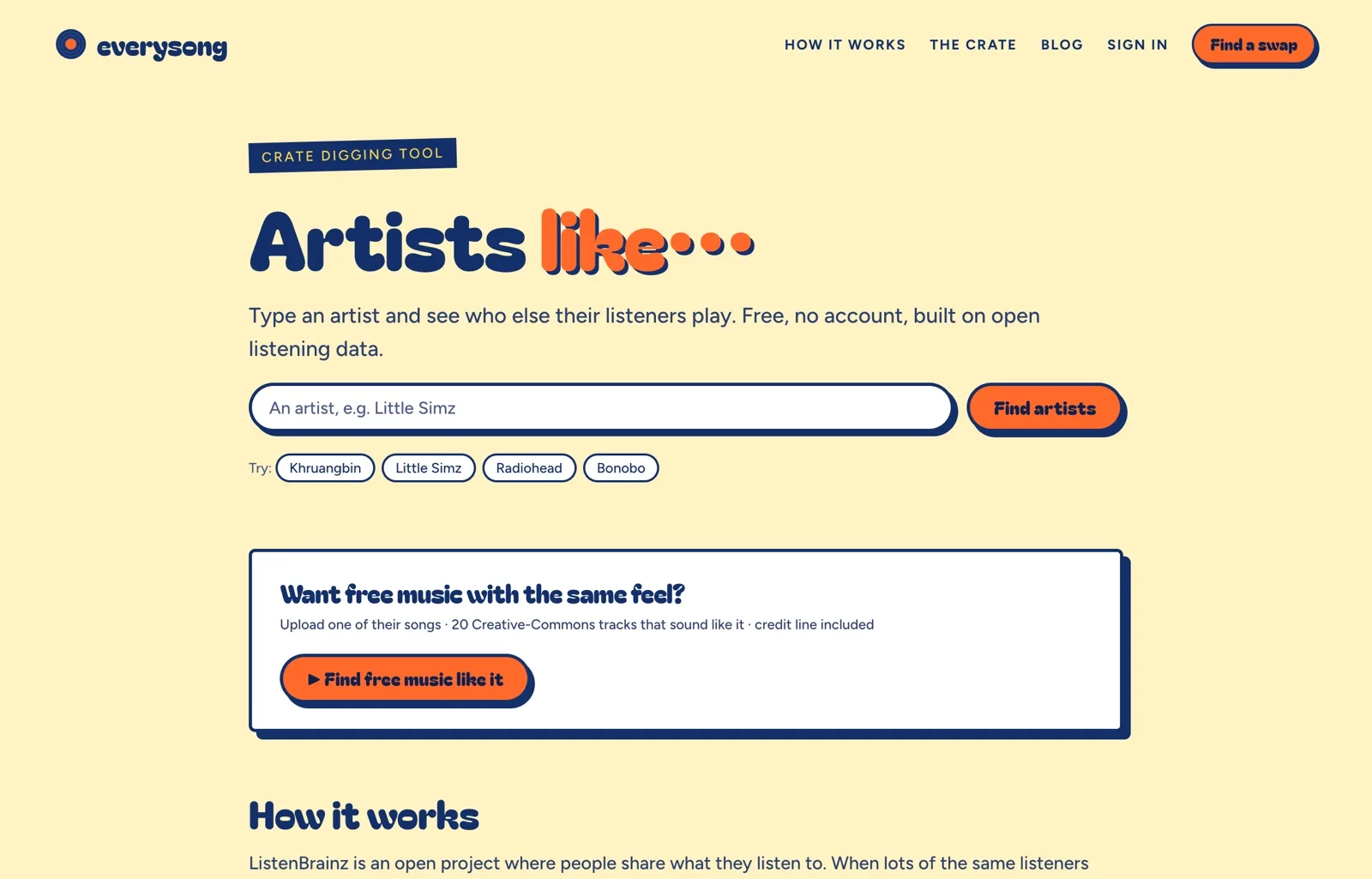
- Artists like… Type an artist and see who else their listeners play, from open MusicBrainz and ListenBrainz data.
- Credit, done. One button copies the licence credit, ready to paste into your description.
It’s the part I’m proudest of, because it’s the bit I’d actually open in the middle of an edit.
Vera does the listening
05
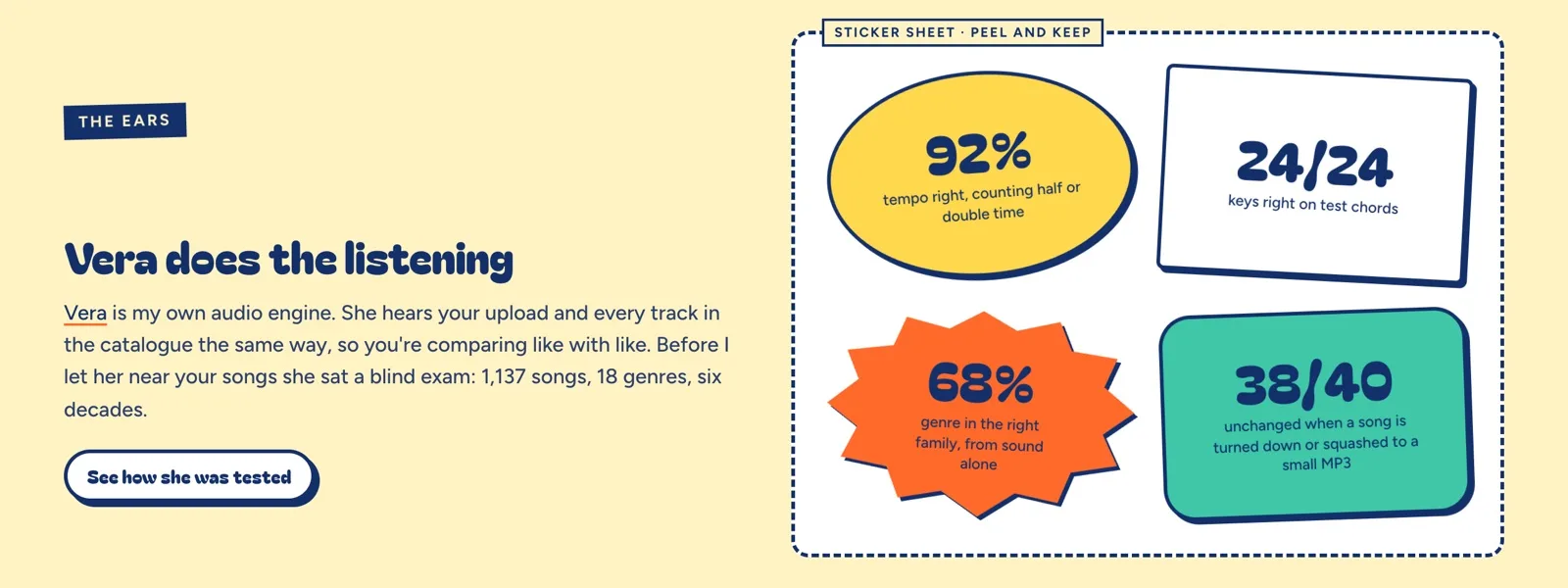
Vera hears your upload and every track in the catalogue the same way, so you’re comparing like with like. When I found out the live site had quietly been running a simpler fallback engine, because Vera had never been packed into the server image, I fixed the deploy. One test song went from 95.7 BPM to the right answer, 117.5.
The look
06
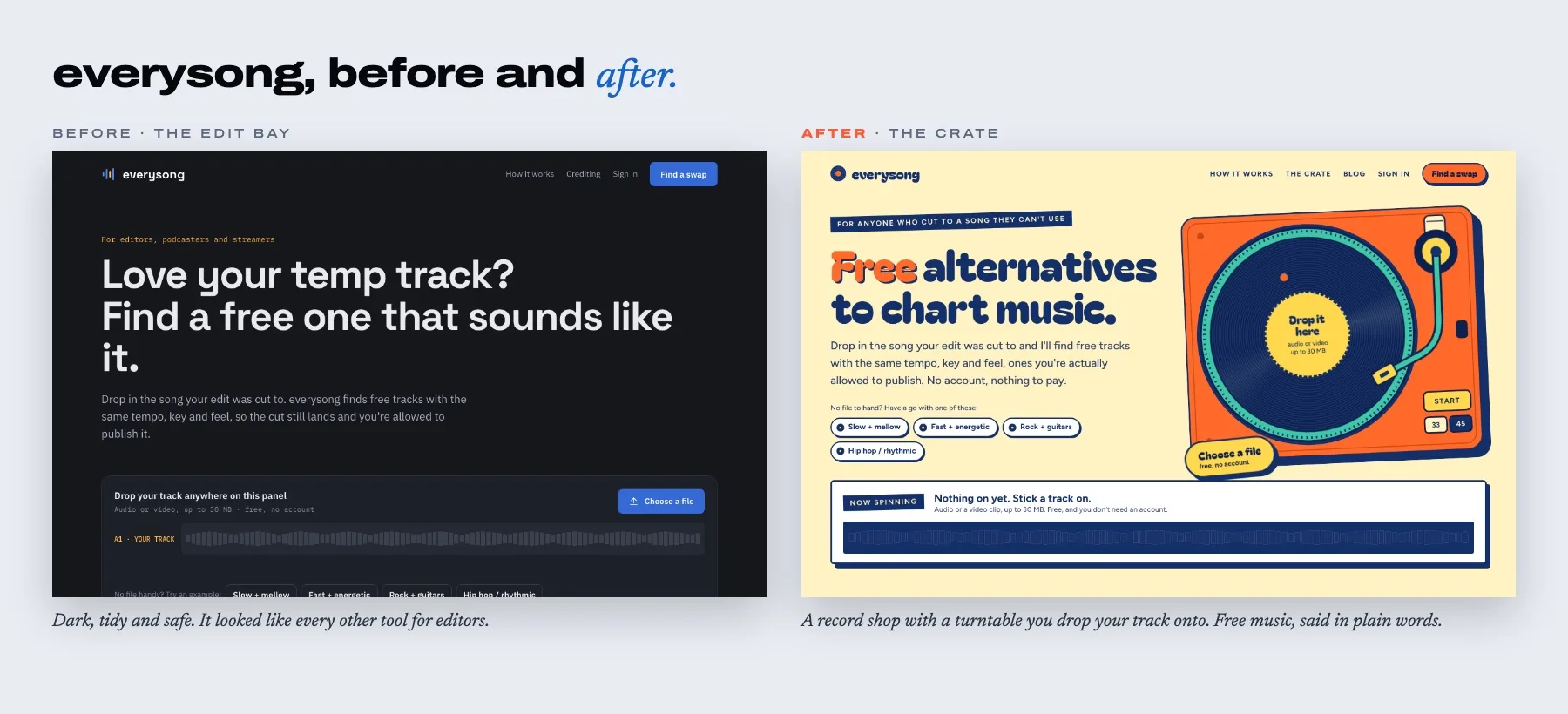
The dark version looked like every other tool for editors. I wanted it to feel like digging through a crate, so the new one has a turntable you drop your song onto and matches that come out as record sleeves. The headline is my line: free alternatives to chart music.
My first go at the record shop turned out too close to a paid website template, so I threw it out and built a look of its own.
Decisions
07
Free, not cheap
Jamendo’s API is free for non-commercial use, so everysong takes no money at all. Not five dollars, not a tip jar.
Straight from the source
Previews stream from Jamendo, with credit and a link to get each track there.
Say what’s true
The homepage used to promise no copyright claims. A claim can still happen, so now it says that, and how to deal with one.
Count clicks, not people
No analytics, no cookies. It counts which matches get played or credited, with no IP address, and the privacy page says so.
Credit first
The licence credit always comes first and stays intact. The everysong line underneath is optional.
A limit that works
Ten readouts a day per person, and a total cap so nobody can keep the machine busy all day. Refused uploads don’t use up your ten.
Honest bits
08
- It makes no money, on purpose. It costs me less than a pound a month to run.
- Two thirds of the catalogue is share-alike (CC BY-SA), which has strings some people won’t want. There’s a filter for the no-strings ones.
- The first readout of the day can be slow while the server wakes up.
- The API had no outside users when I last checked, on 12 November. Every call was mine.
What’s next
- A page showing what people made with their matches, once they start sending links.
- A bigger catalogue, through permission from the artists directly.
- Making the MCP server public, so assistants can find free music too.
How it’s made
09
Claude Code wrote the code. I decided what it should be, what it must never do, and what done looked like, and I tested every release on the live site before I’d call it finished.
Every number here was true on 25 November 2026, unless it says otherwise.